The cyberattacks reported in October and November 2026 against refrigeration systems in European supermarkets have highlighted the consequences of connecting machinery without adequate security measures. These incidents underscore a fundamental challenge for the industry: taking advantage of connectivity without compromising the security of equipment and data.
October and November 2026: Two Waves of Cyberattacks with Serious Consequences
During October and November 2026, supermarkets in several European countries experienced two waves of cyberattacks specifically targeting their internet-connected refrigeration systems.
The first wave occurred in October, affecting supermarkets in France. Just three weeks later, new attacks were reported in other European countries, with Belgium and Sweden among the most affected.
The impact was significant: attackers managed to remotely modify the temperatures of refrigeration equipment, resulting in the loss of fresh and frozen products, substantial financial damage, and disruptions to the operations of the affected supermarkets.
Most concerning was the fact that the attacks did not target the supermarkets’ general IT systems, but rather the devices directly responsible for controlling refrigeration.
As reported by El País, cybercriminals exploited security vulnerabilities in connected systems to gain access and interfere with their operation.
These incidents demonstrate that a cyberattack on industrial machinery can have consequences that go far beyond data theft: it can directly affect equipment performance, disrupt operational continuity, and result in significant financial losses.
Cybersecurity: An Essential Requirement for Industrial IoT
The digitalization of industrial machinery enables real-time equipment monitoring, alarm management, process optimization, and the delivery of new services to customers.
However, connecting machines also introduces new risks if devices, communications, and the platforms managing their data are not equipped with appropriate security measures.
That is why cybersecurity must be integrated from the design stage of any industrial IoT solution, protecting the entire connected environment: from the machinery itself and the devices enabling connectivity to communications and the cloud platform. At Awayter, this security-first approach is embedded in both Awayter Edge and Awayter Connect.
Awayter: Security Built in from the Start
At Awayter, security is one of the fundamental pillars of our industrial IoT solutions. Both Awayter Connect and Awayter Edge are part of our connectivity offering, designed to enable machinery manufacturers to digitalize their equipment securely and reliably.
Nuestras soluciones IoT industriales incorporan diferentes medidas de protección, entre las que destacan:
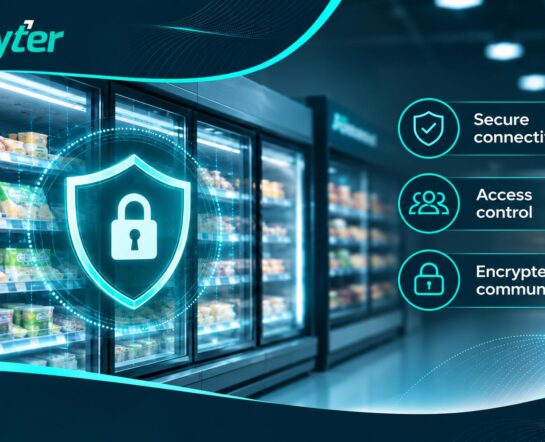
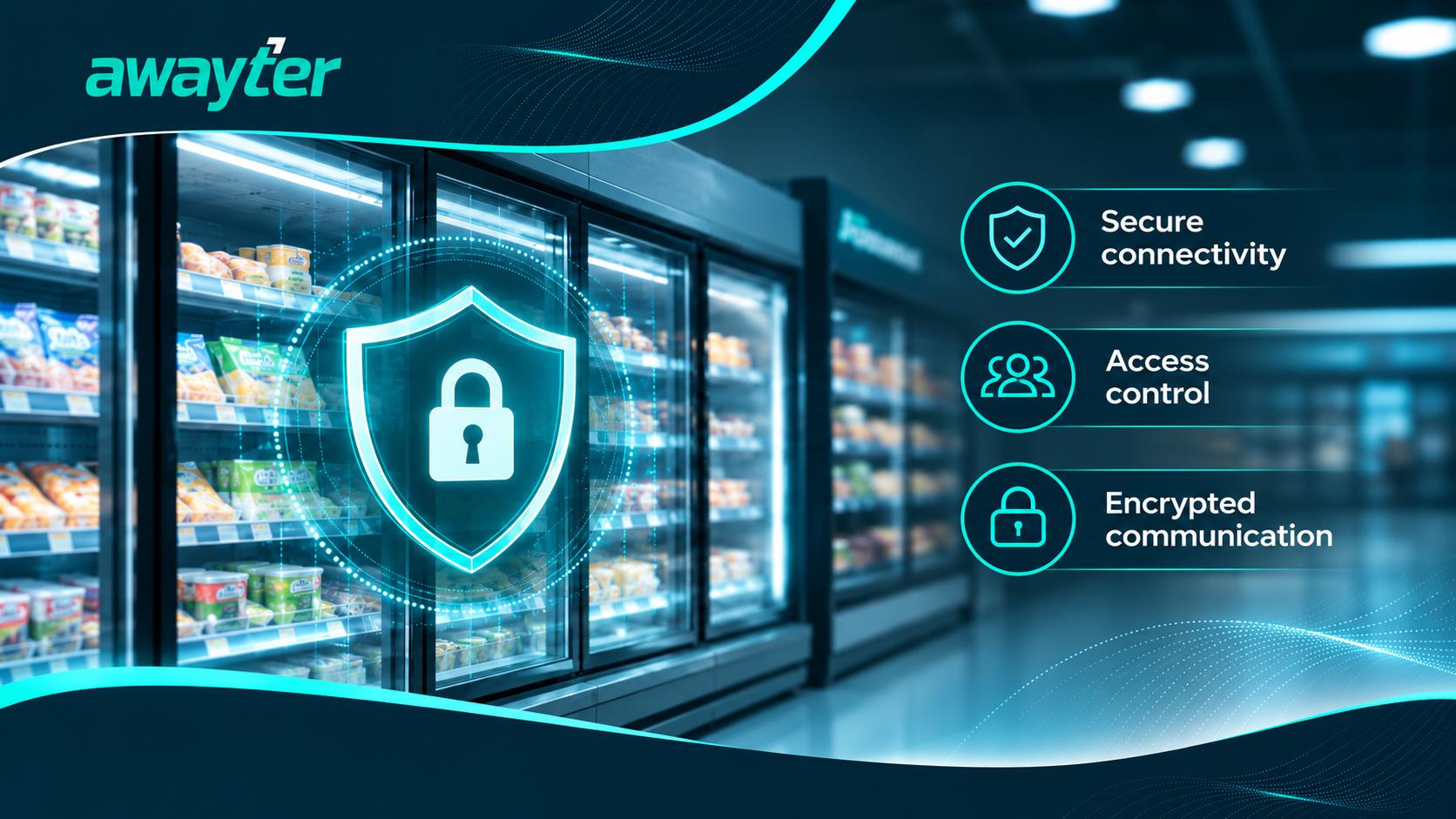
- Encrypted communications: We use secure protocols to protect information transmitted between connected equipment and the platform.
- Access control: We implement multi-factor authentication and role-based permissions to prevent unauthorized access.
- Protected cloud infrastructure: We apply security measures to our servers and perform backups to safeguard information.
- Continuous monitoring and updates: We monitor our infrastructure to detect anomalies and apply updates to reduce vulnerabilities.
- Secure development: We integrate security requirements from the software design stage and conduct reviews and testing before deploying new features.
These measures reflect our commitment to data protection and the reliability of the solutions we provide to machinery manufacturers.
Security Standards and Regulatory Framework
At Awayter, we incorporate security requirements and best practices as a fundamental part of developing our IoT solutions.
Our infrastructure follows the standards of Spain’s National Security Framework (Esquema Nacional de Seguridad, ENS), at the medium level, a reference framework in Spain designed to ensure the protection of information systems.
We also take into account international standards such as ISO 27001, which focuses on information security management, and the European Cyber Resilience Act (CRA), which establishes cybersecurity requirements for products with digital elements.
These frameworks reinforce our approach to security and help us continue developing IoT solutions aligned with the requirements of the industrial sector.
Connecting Machinery Drives Progress. Protecting It Is Essential.
Industrial connectivity creates new opportunities for manufacturers, but security is essential to take full advantage of them with confidence.
At Awayter, we integrate cybersecurity into the development of our IoT solutions so that manufacturers can access data from their machines, improve equipment management, and offer new services supported by a protected technological infrastructure.
Because digitalizing machinery is not just about connecting it, but about doing so securely and reliably.